What to do after a car accident in Los Angeles
After a crash in Los Angeles: get to safety, call 911 if anyone is hurt, photograph the scene and exchange license, registration and insurance details. Decide where your car goes before it is hooked, and refuse tow trucks that nobody called. Report the crash to the DMV within 10 days if anyone was hurt or damage is over $1,000. Go Tow Now tows cars in Los Angeles and quotes the price before the truck leaves.
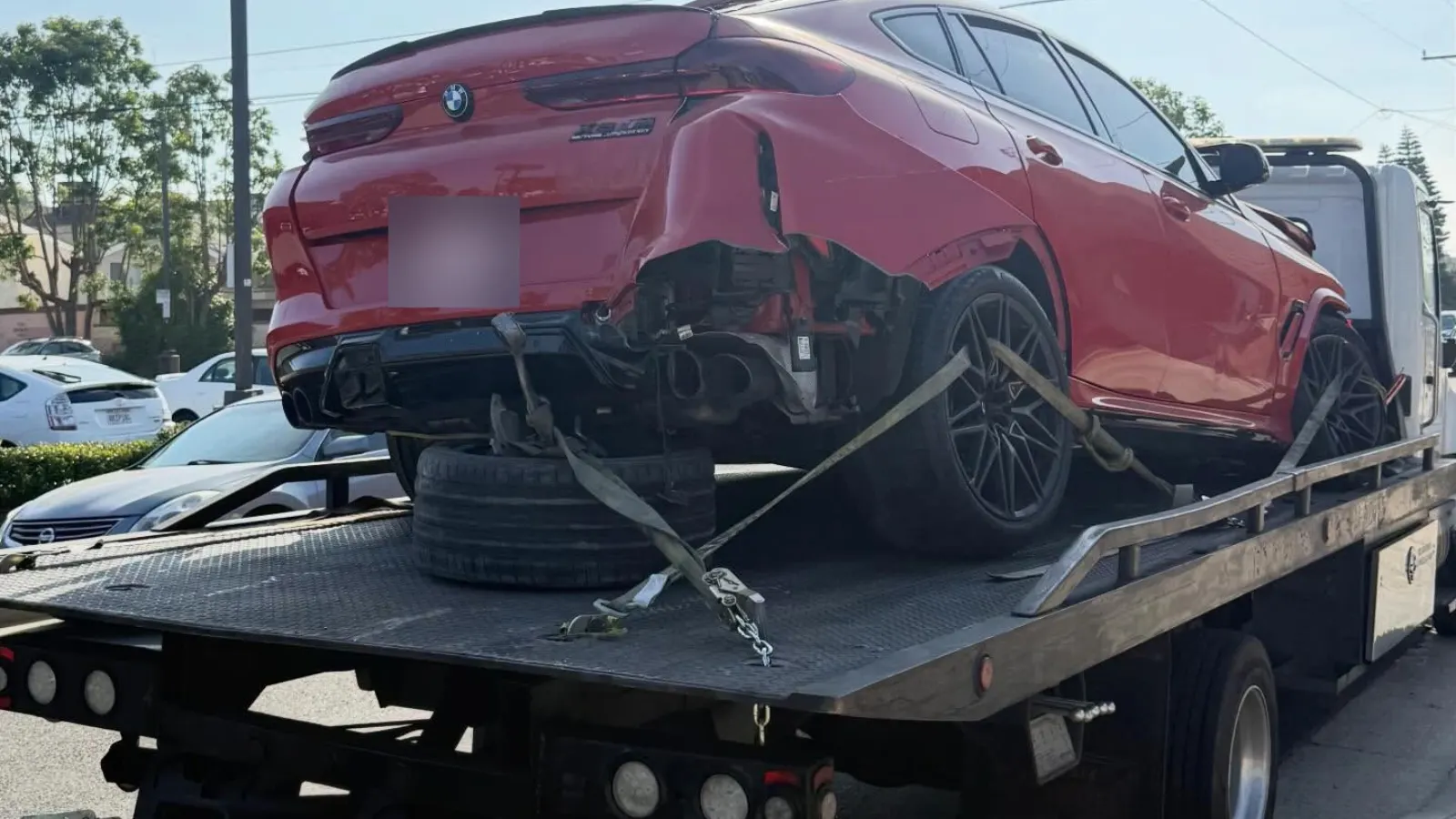
At the scene
- Turn on hazards; if the car moves and nobody is hurt, move it out of the travel lanes.
- Call 911 for injuries, a blocked road or a driver who seems impaired.
- Photograph both cars, the plates, the road, signs and lights, and the other driver's license, registration and insurance card.
- Get the names and phones of witnesses.
- Do not argue about fault; describe what happened to the police.
After a minor accident
- Stop. Leaving the scene of any crash is a hit-and-run, a minor one included.
- Swap details. Show your driver's license, registration, insurance information and current address to the other driver, and check theirs.
- Hit a parked car? Try to find the owner; if you cannot, leave a note with your name, phone number and address on the car, and report the crash to the police.
- Sign nothing about fault and promise to pay nothing; if the other driver offers to pay your deductible, still sign nothing (Department of Insurance).
"Minor" does not end the paperwork: an injury of any size, or more than $1,000 of damage, still needs the DMV report below. If pain shows up in the days after, get checked and keep the medical records and bills: a medical payments or uninsured motorist claim needs that documentation.
The tow
If the car cannot be driven safely, you choose who tows it and where: your body shop, your insurer's preferred shop, or home. If the police order a tow because the car blocks traffic, it goes to the area's Official Police Garage and you can move it later (paying the City's tow and storage).
A tow truck that arrives on its own, before anyone called, may not offer you a tow at a crash (Vehicle Code § 22513). Ask who called it; if nobody did, say no. Our guide to choosing your own tow company after an accident covers when the police pick the truck, the red flags and what to do if one took your car.
Get the tow company's name, the truck number and the drop-off address in writing, and keep the receipt for your insurer.
Reports and insurance
- Police: if anyone was injured or killed, the crash must be reported to the police or CHP within 24 hours. If officers came to the scene, ask for the report number; your insurer will ask for it.
- DMV: each driver files form SR-1 within 10 days if anyone was injured (however slightly) or killed, or damage exceeds $1,000, whoever was at fault and even on private property. The police report does not replace it, and a missing SR-1 gets your license suspended.
- Your insurer: the Department of Insurance says to notify your agent or insurer immediately, even if you were not at fault; give facts, not guesses. If the other driver later sues, your insurer defends a covered loss, so it needs to know of the crash.
Filing the insurance claim
Send the insurer the police report number, your photos, the other driver's name, license, plate and insurance, the witnesses, repair estimates and the tow receipt. The insurer may take a written or recorded statement. Under California's fair claims rules it must acknowledge the claim within 15 days, accept or deny it within 40 days of your proof of claim, and pay within 30 days of agreeing the settlement. If it does not, call the Department of Insurance.
If the accident was not your fault
- Claim from the other driver's insurer, or from your own collision coverage and let your insurer recover the money from the other side (subrogation). Your insurer must tell you whether it will pursue the other side, and if it does, it includes your deductible.
- Do not sign a release with the other driver in exchange for your deductible: it can block your insurer's recovery.
- Keep every receipt, the tow and storage included: the at-fault side owes reasonable towing and storage, reduced by any share of fault that is yours. Our guide to whether insurance covers towing has the details.
If you had no insurance, or the other driver had none
- You had none: the DMV suspends your license for up to 4 years after a crash without proper insurance, whoever was at fault. It can come back during the last 3 years if you file an insurance proof certificate (SR 22 or SR 1P) and keep it. The SR-1 is still due. California's minimum is $30,000 for one person's injury or death, $60,000 for more than one, and $15,000 of property damage.
- The other driver had none: your uninsured motorist coverage, if you carry it, pays under your own policy; it needs records of the injuries, medical bills and lost wages. File your SR-1 either way.
Sources
- California DMV: California Driver Handbook, Financial Responsibility, Insurance Requirements, and Collisions (read 2026-11-13): https://www.dmv.ca.gov/portal/handbook/california-driver-handbook/financial-responsibility-insurance-requirements-and-collisions/
- California DMV: Report of Traffic Accident Occurring in California (SR-1) (read 2026-11-13): https://www.dmv.ca.gov/portal/vehicle-industry-services/accident-reporting/
- California Department of Insurance: So You've Had an Accident, What's Next? (revised December 2024, read 2026-11-13): https://www.insurance.ca.gov/01-consumers/105-type/95-guides/01-auto/hadaccident.cfm
- California Code of Regulations, title 10, § 2695.8(k) (towing and storage after a covered loss; text via Cornell LII, read November 13, 2026): https://www.law.cornell.edu/regulations/california/10-CCR-2695.8
- California Vehicle Code § 22513 (tow trucks at a crash or a disabled vehicle; the written estimate): https://leginfo.legislature.ca.gov/faces/codes_displaySection.xhtml?lawCode=VEH§ionNum=22513
More in Car accident and towing
Questions and answers
What to do after a minor car accident?
Stop, check for injuries, move out of traffic if nobody is hurt, swap license, registration and insurance details, and photograph everything. Sign nothing about fault, and file the DMV's SR-1 if anyone was hurt or damage tops the limit.
What to do after a car accident legally in California?
Stop, help the injured and call 911 if needed, exchange license, registration and insurance details, and file DMV form SR-1 within 10 days if anyone was hurt or damage exceeds $1,000.
Should I call the police after a fender bender?
Call 911 for injuries, a blocked road or a suspected impaired driver. For a minor crash, exchange details, photograph everything and file a report later if needed.
What happens if you don't report an accident in California?
If the crash needed an SR-1 (injury or damage over $1,000) and you do not file it, the DMV can suspend your license.
Who pays for the tow after an accident that was not my fault?
The at-fault driver's insurer usually pays reasonable tow and storage as part of your claim; your own insurer may pay first and recover it. Keep the receipt.
Should I contact my insurance if I'm not at fault?
Yes: report it promptly. Your policy requires it, and your insurer can handle the claim with the other driver's insurer.
Is it worth calling insurance for a fender bender?
Report it even if you plan to pay yourself: if the other driver files a claim or an injury appears later, an unreported crash is harder to defend.
How long after a car accident in CA can you still report it?
File the DMV SR-1 within 10 days. Insurance policies require prompt notice; check yours.